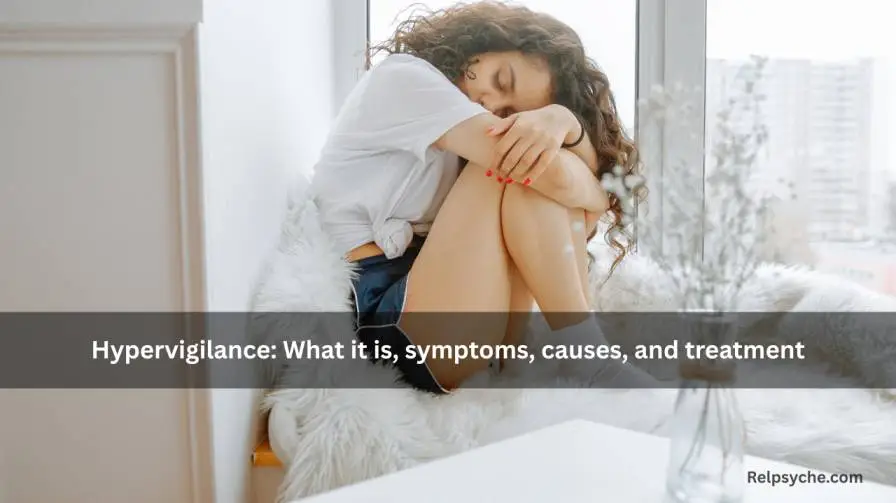
Hypervigilance: What it is, symptoms, causes, and treatment
Living with your body and mind in a constant state of tension can become so commonplace that you don’t even notice it happening. You might always feel “on guard,” find it hard to relax, or perceive your surroundings as more demanding than they actually are.
Many people experience this without knowing that it has a name and explanation: hypervigilance, a phenomenon that affects emotional and physical well-being, and that often goes unnoticed until it interferes with daily life.
Table of Contents
What is hypervigilance?
Hypervigilance is a mental state in which your mind and body are constantly “on high alert,” as if something bad might happen at any moment. It’s an extreme form of alertness that can appear after difficult experiences, periods of intense stress, or certain emotional conditions.
In other words, your nervous system interprets the environment as potentially dangerous, even when there are no real threats. This is a natural bodily mechanism—the fight-or-flight response—but it’s activated constantly and disproportionately.
This state is closely related to anxiety, post-traumatic stress, and other situations where the perception of danger becomes exaggerated.
Therefore, when someone is in a state of hypervigilance:
- Their focus is on detecting threats.
- His body remains tense.
- His brain detects and interprets signals that it would normally ignore.
- He finds it difficult to feel safe even in calm moments.
Symptoms of hypervigilance
Symptoms can vary from person to person, but are usually divided into physical, emotional, and behavioral.
Physical symptoms
- Constant muscle tension.
- Fatigue, even after resting
- Recurring headaches.
- Difficulty sleeping or insomnia.
- Frequent startles.
- The feeling of having the body ready to act or react
Emotional symptoms
- Persistent anxiety or restlessness.
- Irritability or getting angry more quickly.
- Difficulty relaxing, even when you try.
- A feeling that something bad is about to happen.
- Difficulty trusting others.
Behavioral symptoms
- Automatically scanning the environment (looking at entrances, exits, noises…).
- Constant need to control situations.
- Avoid places you can’t easily supervise.
- Hypersensitivity to changes, noises, or movements.
- Difficulty concentrating or maintaining attention on routine tasks.
If you find that you have experienced several of these symptoms for weeks or months, you may be going through a state of hypervigilance.
Causes of hypervigilance
Hypervigilance does not appear “just because,” but has deep roots in past experiences, learning, and the functioning of the nervous system.
Post-traumatic stress disorder (PTSD)
It is one of the most common causes. After a traumatic event—an accident, a loss, an assault, or any experience that your brain interpreted as dangerous—your nervous system may remain in a state of constant protection
Generalized anxiety or prolonged episodes of stress
When you live under prolonged stress—whether due to work, family, financial, or personal problems—your brain becomes accustomed to anticipating danger. Even if the situation improves, it remains on high alert because it has learned that “something could go wrong.”
Childhood in unpredictable environments
People who grew up in an environment with shouting, violence, abrupt changes, or unstable figures often develop hypervigilance as a survival mechanism. In adulthood, this pattern persists even when it is no longer necessary.
Anxiety or panic disorders
Intense anxiety can lead to an exaggerated interpretation of environmental cues. After all, anticipatory fear fuels hypervigilance.
Burnout or emotional exhaustion
If you have been operating beyond your limits for too long, hypervigilance may appear as a sign of nervous system exhaustion.
High sensitivity or excessive self-demand
Some people, whether due to personality traits or learned behavior, develop a heightened sensitivity to stimuli or an excessive need for control. These traits can also contribute to episodes of hypervigilance.
Treatment: how to manage hypervigilance
Overcoming hypervigilance is possible, although the process requires patience. It’s not about “stopping being on high alert” overnight, but about teaching your nervous system that it no longer needs to constantly protect itself. Let’s look at some of the most effective strategies.
1. Psychotherapy
One of the most recommended tools for treating hypervigilance is psychotherapy. However, the type of therapy will vary depending on the professional and your preferences
- Cognitive behavioral therapy (CBT) helps to identify irrational fears, distorted beliefs, and thought patterns that fuel alertness.
- EMDR (Eye Movement Desensitization and Reprocessing): especially useful if the cause is a trauma or a distressing memory.
- Somatic or body-centered therapies: work directly on the physiological stress response, helping to relax the nervous system.
- Compassion therapy or mindfulness: effective in reducing self-criticism and returning to the present moment.
2. Regulate the nervous system
Your body needs to learn how to return to a state of calm. Key practices for this include diaphragmatic breathing, grounding (focusing on what you touch, hear, or see), muscle relaxation, gentle walks, soft movements, and paying attention to sleep, nutrition, and rest. These techniques send signals of safety to the nervous system.
3. Reduce stressful environments
While it’s not always possible, avoiding overly noisy, chaotic, or stressful environments helps prevent your body from triggering its internal alarm system. If you lack the resources to improve your surroundings, you can use music, meditation, or exercise to regulate your mood.
4. Work on control and self-discipline
If hypervigilance stems from a desire to control everything, it’s essential to cultivate mental flexibility and self-compassion, and learning to accept uncertainty is part of the treatment. To do this, you can practice therapeutic writing—that is, writing down everything you feel in a journal or on a piece of paper, without filters. Let your hand and your thoughts flow.
5. Medication
In some cases, medication can be helpful (and necessary) to control anxiety or regulate sleep. However, remember that this tool should always be evaluated and prescribed by a doctor or psychiatrist.

Conclusion
Hypervigilance is more than just stress or worry. It is a state where your mind and body stay on high alert, even when you are safe. This constant tension can affect your sleep, your emotions, your relationships, and your ability to enjoy life. The good news is that hypervigilance can improve with understanding, support, and the right tools. Healing takes time, but your nervous system can learn to relax again. With therapy, daily calming practices, and kinder self-care, you can slowly return to a life that feels safe, peaceful, and balanced.
Ready to take the next step in your personal growth? Explore expert services — from therapy to life coaching — available on Fiverr.
If you want to read more articles similar to Hypervigilance: What it is, symptoms, causes, and treatment, You Need to Know, we recommend that you enter our Psychology category.
FAQs
1. Is hypervigilance the same as anxiety?
Not exactly. Anxiety is a feeling, while hypervigilance is a state where your whole body stays alert, scanning for danger. Anxiety often leads to hypervigilance, but the two are not always the same.
2. Can hypervigilance go away by itself?
Sometimes it improves when stress decreases, but in many cases it continues unless treated. Therapy, nervous-system regulation, and lifestyle changes help reduce it faster and more effectively.
3. Is hypervigilance a trauma response?
Yes, it can be. Many people develop hypervigilance after trauma because the brain learns to stay alert to protect itself. However, it can also appear from long-term stress or anxiety disorders.
4. How long does it take to recover from hypervigilance?
Recovery time varies for each person. Some feel better in weeks, while others need months. What matters is consistency—small daily practices and the right support can make a big difference over time.
5. Can hypervigilance affect relationships?
Yes. It can make you feel distrustful, irritable, or overly protective. You may react strongly to small things or avoid social situations. As you begin to calm your nervous system, relationships also become easier and healthier.
References
- Briere, J., Scott, C. (2015). Principles of trauma therapy: A guide to symptoms, evaluation, and treatment (2nd ed.). SAGE
Bibliography
- American Psychiatric Association. (2013). Diagnostic and Statistical Manual of Mental Disorders (5th ed.; D. Bogdanos, Trans.). Editorial Médica Panamericana. (Original work published in 2013)
- American Psychological Association. (2023). Understanding anxiety and trauma responses. APA Publications.
- Clark, D.A., Beck, A.T. (2012). The anxiety disorders: The nature and treatment of anxiety and panic. Guilford Press.
- Levine, P. A. (2010). In an unspoken voice: How the body releases trauma and restores goodness. North Atlantic Books.

I’m Emma Johnson, a psychologist who loves to write and share ideas.
I enjoy making psychology simple so everyone can understand and use it in daily life.
If you’d like to talk, ask questions, or work together, feel free to reach out.
Let’s learn and grow in the world of psychology together!